Sunday, March 19, 2023

Life in Eden (Hills)

Ted. It didn’t take long for us to become comfortable in this appropriately named suburb of Adelaide. In our first couple of weeks, we have visited several popular destinations. 

The South Australian Museum has the most extensive collection of Aboriginal artifacts in the world. People have lived on this continent for at least 50,000 years. There may have been as many as 500 tribes, each with it’s own language and culture. The museum has grouped the tools, weapons, baskets, etc by tribe so one can see the similarities and variations that existed across the continent. It is overwhelming but fascinating. 

Belair National Park is very near us. We did a short walk there and learned about the variety of wildlife to be found so a return trip is on our schedule. 

We live just three blocks from Wittunga Botanic Garden so it is easy to drop by there to enjoy the wide variety of indigenous plants on display. 

Most of our days, though, are spent just living here. We can take a short walk to the village of Blackwood for everything we need. As Judy says, it’s a bit like returning to the 50’s. Along a four block stretch of Main Road, one can find three groceries, two butchers, a seafood market, a fruit and vegetable stand, two bakeries, a pharmacy, a hardware store, four barber shops, six op shops (thrift stores), three banks, lots of cafes and restaurants and countless other small shops. It’s fun to just prowl around, stop for a coffee and then walk home to cook lunch and take a nap. 

Each morning we are awakened by the otherworldly songs of the Australian Magpies in our garden. Go to Youtube and type in “Australian magpie singing”. 

While we enjoy our breakfast we are often visited by some of the many other local birds. Once again, I feel compelled to share a few images from the Internet. 
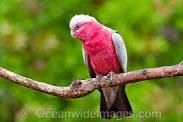
Galah


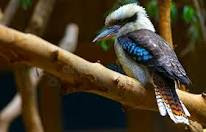
Kookaburra


Crested pigeons


Rainbow lorikeets

Noisy miner

The noisy miner is a bird which we see everywhere but have learned to despise. To understand why, return to Youtube and watch a short video called “Noisy miners: when good birds go bad.” We have actually witnessed a flock of noisy miners swarming a pair of cormorants who had chosen the wrong tree in which to dry their wings. Hitchcock would have loved it! 

On Sunday mornings, we take the train to Church of the Holy Innocents. The people there are extremely friendly and after the service, someone invariably drives us back home. 

The weather is also Edenlike, typically sunny and mid seventies. I suppose we could get by wearing just fig leaves but then the kookaburras would never stop laughing!

Thursday, March 9, 2023

A new routine in Adelaide

Ted. It took two days and three flights, but on February 28 we arrived in Adelaide, Australia. We thoroughly enjoyed our time in New Zealand but thought that since we’d come this far, we should go a little further and explore more of “the southern land.” 

Our first visit to this country was six years ago and we focused on two states, New South Wales and Victoria so we decided to see some more states this time. Adelaide is the capital of South Australia. With 1.4 million people, we knew this city would provide a much different experience than we had in little Nelson which just had 54,502 folks (while we were there). 

For our base, we rented a two bedroom Airbnb cottage in Eden Hills, a small leafy suburb. There is a good public transportation system here so we have not rented a car. It took a few days to settle in, buy groceries, find a church and adjust our sleep schedule (Western Australian time is 2-1/2 hours earlier than New Zealand). 

Judy will, no doubt be talking about the wonderful people we are meeting. I will add that there is a whole new population of birds to observe and it seems as though every local species wanders into our front yard every day. My favorite so far is the Adelaide Rosella. This afternoon we fly to Hobart, Tasmania for a five day visit. After that, we still have nearly a month more in Adelaide. No doubt more adventures await.

Our front yard


Adelaide Rosella (image from internet)

Monday, March 6, 2023

Christchurch

 Judy. I can't "leave" New Zealand without a short blog about Christchurch, or at least, my reaction to it.

When we came to New Zealand on our first visit six years ago, we made a conscious decision not to go to Christchurch, as they were only a few years past the devastating earthquake that did so much damage to the city. We just didn't feel that we were much needed, with all the work going on. When we wanted to go this time, the refrain we heard over and over was,"Oh, it just won't be the same as it was before the 'quake."

Well, I don't know. I didn't see it before the 'quake. But I had a friend there, and our niece Ashley's best friend from high school was there, so we decided to make the trek. And I'm so very glad.

The Arts Center is back and busy


What we saw was a city coming back. Yes, there were still scaffolds and wraps around buildings, and the magnificent Cathedral isn't expected to be finished until 2027, but the Botanical Gardens were in full bloom, the Arts Center (formerly the University of Canterbury, but repurposed years ago) had music, plays, art galleries, and tours open and in use.


A tiny garden in the magnificent Botanical Gardens


We walked to the "Cardboard Cathedral", which is more technically called the "Transitional Cathedral". When the old one was destroyed, a member of the staff saw an article in an architectural magazine about a Japanese architect named Shigeru Ban, who had designed a cardboard church after the Kobe earthquake. After visiting Christchurch, Ban offered to design one for the Cathedral parish, so they had a place to worship until the massive work on the old church could be finished. 

The front of the Cathedral

The interior--the cardboard tubes lift the eye to the cross

The old Rose Window was destroyed, but this one brings color into the sanctuary


According to the flyer I picked up there, it is built of cardboard tubes, local wood, and steel, with a polished concrete floor and a polycarbonate roof. It's built to 130% of the current earthquake code, and is designed to last at least 50 years. When the Cathedral work is finished, it will become a parish church. I found myself deeply moved by the building and by the parish that is still very active. It seemed a metaphor for the city itself, refusing to give up, and getting right on with its new life.

My two meetups gave me the same feeling. 

I met Mary about three years ago in Santiago, Chile. She was in a bad, bad marriage, and was quite ill. As a former nurse, she disagreed with the diagnosis the doctor gave her, and so, leaving behind her marriage and her home of 27 years, she returned to her hometown of Christchurch, where her loving family took her in, gave her a place to live, and nursed her back to health. When she took us to dinner at her brother's home, I could hardly believe this vibrant, beautiful woman was the same Mary I had met. She's now a nurse in a home for the elderly, and loves it, and is in the process of building her own place on her family property. Like the city, she got herself back together and is building a new and better life.

So happy to see this glowing Mary!

Charlotte and her husband moved from Seattle to Christchurch shortly after the earthquake to help in rebuilding. Her husband was a contractor, and she, a lawyer. They made a home there and had a daughter, Maple. Unfortunately, Charlotte's husband died sometime after they arrived, but she and her feisty daughter Maple have made a home in New Zealand. She loves the simple lifestyle with plenty of opportunities to explore nature. She is an attorney specializing in building contracts--making sure the codes are followed. Again, reinventing her life, like the city is.


Maple likes to "climb on things that aren't meant to be climbed on!"

Three women in Red. Great day with Charlotte and Maple


No, we didn't see the Christchurch of 2010. But we saw a city embracing the old and the new, and coming back stronger than ever.

Saturday, March 4, 2023

Birds of New Zealand

Ted. New Zealand and Australia were once connected but over the past 85 million years, the distance between them has grown to about 1,000 miles (so, no, there is not a bridge connecting the two countries). 

Obviously, the plants and animals of New Zealand have been evolving in isolation from the rest of the world for a long, long time. Virtually all of the reptiles and mammals that once roamed the islands gradually disappeared so New Zealand remained a bird paradise for millions of years. 

When humans first arrived, maybe 500 - 700 years ago, researchers believe there were about 200 different species - nearly all found only on these remote islands. Polynesians, later known as Māori, and then Europeans brought other mammals with them and the birds became a major food source for all of the newcomers. Extinctions ensued, beginning with the group of species now called Moa; some of which were up to 12 feet tall. 

Moa hunters

Hiking through the forests today, the plants and birdsongs are so remarkably different that I constantly feel like I'm on another planet. Of the dozens of species that are not found anywhere else on earth, a few stick out in my mind. 

As a small, shy bird, the kiwi may serve as a national symbol, but it is seldom seen. Wherever one turns, though, one sees and hears the cry of the Tui. That's the bird I most associate with this country.

Note - all images are from the Internet

My favorite songbird, though is the korimako or bellbird. Captain James Cook famously described it’s song, “it seemed to be like small bells most exquisitely tuned.” To hear them, just search "New Zealand bellbird song" on Youtube.


A huge forest bird is the magnificent kererū. 


The flightless Wekas can be pests on the trail as they love to beg for crumbs.


Piwakawakas (fantails) and tiny kakaruwais (robins) also stalk the trails because hikers stir up bugs that they eat. 


I suppose my favorite is the Pūkeko, though, because they have big feet, just like me.


Pūkeko crossing sign


Friday, March 3, 2023

Kiwis

Judy. No, not the birds. This time we never even saw one of the little critters. Nope. I'm talking about the lovely humans who made our visit so wonderful.

I don't know why we thought three weeks in Nelson would be enough. In the last ten days or so, we finally were able to spend more time with the folks we met. 

I have to add first Anna, the owner of Te Whāre Ra, the winery we visited in Blenheim. It's a small, family owned winery, run by Anna and her husband, while they care for their two sets of twin girls. Anna had a delightful way of describing their wines, not only by the usual "citrus", "floral", etc. but by the names of famous people. Sure enough, when she said, "This one is Audrey Hepburn in 'Roman Holiday', and this one is Audrey Hepburn in 'Breakfast at Tiffany's'," I knew exactly what she meant! Originally from an Australian wine family in the McLaren Vale region, near Adelaide, she sent Ted a LONG list of the wineries we should visit in South Australia. I wish I had gotten her photo!

We had contacted a couple of Servas hosts to meet for coffee or lunch, but, as we were in New Zealand during their vacation season, neither, Jenny nor Barbara and Tim were available till the last week. As it turned out, both were involved with the community choirs and performed at "Sing Fest", a day of music around the city.

Jenny is a real go-getter. She both performed and conducted in a couple of the choirs. We met the day before the festival at the Suter Gallery, a popular museum and cafe, to talk about--well, to talk about the stuff you talk about! 

Tim and Barbara had spent their vacation time volunteering with the Department of Conservation, something they do every year.  They are avid cyclists, and passionate about stopping climate change, even giving up international travel to reduce their carbon footprint. I wish we'd had more time to hear more about their commitment.

Tim and Barbara

As we often do, we attended a small church, All Saint's Anglican Church, a short walk from our apartment. The first people to greet us were Joan and Peter, who immediately asked when we could get together for coffee. Peter is a retired dermatologist, for years the only one in the area! Joan is a retired teacher. While Joan and I chatted about what we had in common, Peter was regaling Ted with stories. 

With Peter and Joan on our last Sunday

Kathy was also a member at All Saints, and grabbed us after the service to stay for tea. Every Sunday she found us and made suggestions about places we might want to visit. When I said that the New Zealand Prayer Book is my favorite, and I might order one when I get home, she sent her personal copy with me for the week.

Kathy's favorite color is purple

On the night we attended Opera in the Park, we began talking to Lizzy and Steve, who sat next to us. Lizzy is part Maori, and translated some of the speeches for Ted. At the end of the evening, they got our contact information and invited us for wine and snacks. We drove out to their beautiful home in Ruby Bay, and spent a great evening exploring the differences in our countries and how much we all love travel. Lizzy's long time friend Pat was also visiting from San Francisco, and we found we had a mutual friend!

Lizzy, Steve, and friend Pat


A couple of nights before we left, we ran into our Airbnb host, Michelle, who is about to set off on her own journey. It seems she told her parents, Glen and John, about our lifestyle, and, as former travelers, they invited us for a barbecue. Over New Zealand wines, steaks, and vegetables, we compared visits to foreign cities, and our own opinions of each others' countries. It was an evening filled with laughter, and I'll not soon forget it.

Michelle, with her parents John and Glen


So now I guess there's nothing for it but to go back.